A few years ago, I stood in the skincare aisle staring at dozens of bottles that all promised the same thing: brighter skin in just seven days. Some even claimed they could make dark spots disappear overnight. It sounded tempting, but it also made me wonder—if it were really that easy, wouldn’t everyone have flawless skin already?
That experience taught me an important lesson. When it comes to what brightening creams should Black people avoid, the answer isn’t about avoiding every brightening product. It’s about avoiding the wrong ones.
As someone who has spent years learning about skincare for melanin-rich skin, I’ve discovered that healthy, glowing skin comes from protecting your natural complexion—not fighting against it.
- Can Cocoa Butter Remove Dark Spots? Here’s What I Found
- Best Body Wash for Hyperpigmentation on Black Skin
- Which Body Lotion Is Best for Glowing Black Skin?
- How Do I Get Rid of Acne Marks on Black Skin?
- Which Skincare Routine Is Best for Melanin-Rich Skin?
Brightening Isn’t the Same as Bleaching
This is probably the biggest misunderstanding I see.
A good brightening cream helps fade dark spots, acne scars, sun damage, and uneven skin tone. It doesn’t change your natural skin colour.
Bleaching products, on the other hand, try to suppress or destroy melanin. That might produce lighter skin temporarily, but it often comes with serious side effects.
If a product promises you’ll become “three shades lighter in one week,” that’s usually a giant red flag. Your skin isn’t a white T-shirt—you can’t safely throw it into bleach and expect great results.
Brightening Creams Black People Should Avoid
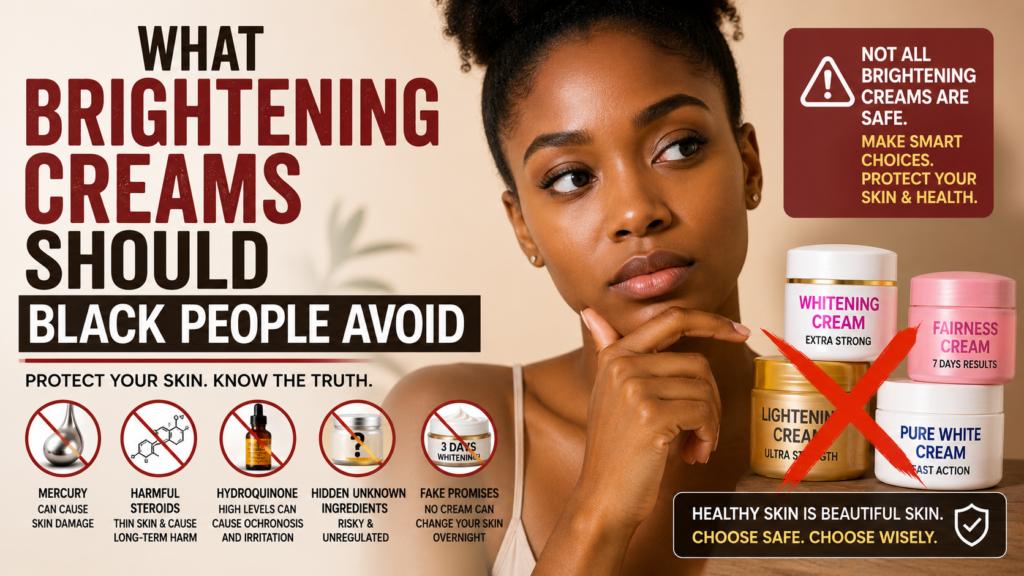
When people ask me what brightening creams should Black people avoid, these are the ingredients and warning signs I tell them to watch for.
1. Mercury-Based Creams
Mercury has absolutely no place in skincare.
Unfortunately, some illegal skin-lightening creams still contain mercury because it quickly reduces pigment.
The risks include:
- Kidney damage
- Nervous system problems
- Skin thinning
- Long-term toxicity
- Harm to unborn babies during pregnancy
Many countries have banned mercury in cosmetics, but counterfeit products still appear online and in informal markets.
If the ingredient list doesn’t exist—or looks suspicious—I simply don’t buy it.
2. High-Strength Hydroquinone Without Medical Supervision
Hydroquinone can help treat stubborn hyperpigmentation when prescribed by a dermatologist.
The problem is using strong concentrations for months without professional guidance.
Long-term misuse may cause:
- Uneven patches
- Blue-black skin discolouration (ochronosis)
- Increased sun sensitivity
- Irritated skin
If you’re considering hydroquinone, talk to a dermatologist instead of relying on random online advice.
3. Topical Steroid Creams Hidden Inside “Beauty Creams”
Some creams secretly contain corticosteroids like clobetasol or betamethasone.
These steroids may lighten the skin quickly because they reduce inflammation, but continued use can lead to:
- Very thin skin
- Stretch marks
- Easy bruising
- Visible blood vessels
- Steroid dependence
The scary part is that some products don’t even list these ingredients on the label.
4. Products With No Ingredient List
This one is simple.
If I don’t know what’s inside a cream, I’m not putting it on my skin.
Avoid products that:
- Have no manufacturer information
- Make unrealistic promises
- Have fake certifications
- Don’t list ingredients
- Claim “secret whitening formula”
Mystery ingredients belong in detective novels—not skincare.
5. Strong Alcohol and Fragrance-Heavy Creams
These don’t necessarily brighten the skin, but they can weaken the skin barrier.
When the skin barrier becomes damaged, Black skin often responds with more inflammation, which can actually create darker marks after the irritation heals.
That’s the opposite of what most people want.
Ingredients I Prefer Instead
Instead of chasing miracle products, I look for ingredients backed by research.
Some of my favourites include:
- Niacinamide
- Vitamin C
- Azelaic acid
- Lactic acid
- Tranexamic acid
- Thiamidol
- Ceramides
- Hyaluronic acid
These ingredients help improve skin tone gradually while respecting your natural melanin.
Why Sunscreen Matters More Than Most Brightening Creams
Here’s something that surprised me when I first learned about skincare.
You can spend a fortune on brightening creams, but if you skip sunscreen every day, many dark spots will simply return.
UV rays trigger melanin production, which makes existing pigmentation darker.
That’s why I never think of sunscreen as optional—it’s part of every brightening routine.
How I Choose a Safe Brightening Cream
Whenever I’m shopping, I ask myself a few simple questions:
- Does it list every ingredient?
- Is it made by a reputable company?
- Does it promise healthy skin instead of lighter skin?
- Are dermatologists willing to recommend it?
- Are the reviews from real users rather than obvious fake testimonials?
If the answer is yes, it’s worth considering.
If the product promises instant transformation, I usually keep walking.
The Bottom Line
If you’re wondering what brightening creams should Black people avoid, the answer is surprisingly straightforward.
Avoid products containing mercury, hidden steroids, unregulated high-strength hydroquinone, or mystery ingredients. Stay away from creams that promise dramatic whitening in just a few days, because healthy skin doesn’t work that way.
Instead, choose products designed to brighten safely by fading dark spots and improving skin tone over time. Your melanin is one of your skin’s greatest strengths, not something that needs to be erased.
For me, skincare isn’t about becoming lighter—it’s about becoming healthier. And honestly, healthy skin has a glow that no shortcut in a jar can ever fake.