Disclosure: This article contains Amazon affiliate links. If you buy through one, we may earn a small commission at no extra cost to you. We only suggest products worth considering for the concerns discussed below.
Best Body Wash for Hyperpigmentation on Black Skin. Dark marks on the body can be frustrating because they often linger long after a spot, ingrown hair, bite, or irritation has healed. If you are looking for a body wash for hyperpigmentation on Black skin, I think it helps to start with a realistic goal: a cleanser can support an even-looking routine, but it will not erase every mark overnight. We get better results when we protect the skin barrier, avoid repeated irritation, and pair a thoughtful wash with moisturiser and daily sun protection where skin is exposed.
Melanin-rich skin is not “difficult”; it is simply more likely to show lingering post-inflammatory hyperpigmentation after inflammation. That is why a harsh scrub, a strongly fragranced shower gel, or overusing active ingredients can work against the result we want. In this guide, we will look at ingredients, a simple routine, and a few Amazon.com options to consider without promising miracle results.
What a body wash can—and cannot—do
A wash only stays on the skin briefly, so it is best viewed as the first supportive step rather than the whole treatment plan. The right formula can cleanse away sweat, sunscreen, and oil without leaving the body tight or itchy. Some washes also use gentle exfoliating ingredients such as salicylic acid, lactic acid, or urea. These can be useful when rough texture, body acne, or clogged follicles are contributing to marks.
What I would not expect from a cleanser is a dramatic fading result on its own. For persistent or spreading dark patches, painful bumps, or a sudden change in pigmentation, we should speak with a dermatologist. That is especially important if a product stings, burns, or causes a rash. Keeping irritation low is one of the most practical ways to avoid creating new marks while we work on older ones.
How to choose a body wash for hyperpigmentation on Black skin
When shopping, look beyond the word “brightening.” A good body wash for hyperpigmentation on Black skin should match the reason the marks appeared. If the issue follows body acne or ingrown hairs, a salicylic-acid wash may be more relevant than a heavily perfumed “glow” product. If the skin is dry, flaky, or easily irritated, a gentle fragrance-free wash may be the smarter first choice. Dry, inflamed skin is less likely to tolerate exfoliating products well.
- Salicylic acid: A beta hydroxy acid that can help keep pores and hair follicles clearer. It is often useful for body breakouts and ingrown-hair-prone areas.
- Lactic acid or urea: Helpful in leave-on products for rough, bumpy texture. In a rinse-off wash, they are supporting ingredients rather than a complete solution.
- Fragrance-free, creamy cleansers: A reliable option when your priority is calming dryness and preventing new irritation.
- Barrier-supporting ingredients: Ceramides, glycerin, and mild surfactants are worth prioritising when the skin feels tight after showering.
I also recommend introducing one active product at a time. Start two or three times a week rather than using a stronger wash every day immediately. If your body feels sore, overly dry, or itchy, pause and return to a plain gentle cleanser until the skin settles.
Three Amazon.com options worth considering
CeraVe SA Body Wash for Rough & Bumpy Skin
See CeraVe SA Body Wash on Amazon.com. This is a sensible option for someone whose marks are accompanied by rough texture, clogged-looking pores, or bumps on the arms, chest, back, or legs. Its appeal is that it combines a salicylic-acid focus with a cleanser designed for regular body use. The limitation is equally important: exfoliating washes can still feel drying on sensitive skin, so I would begin slowly and moisturise after showering rather than assuming more frequent use is better.
Naturium The Perfector Salicylic Acid Skin-Smoothing Body Wash
See Naturium’s salicylic-acid body wash on Amazon.com. This is worth considering if you want a body-acne-focused wash that also fits into a texture-smoothing routine. We should still be careful with expectations: it can support a routine for bumps and congestion, but it is not a replacement for a diagnosis or prescription treatment when acne is painful or widespread. If you already use exfoliating body lotions, alternate them rather than layering several acid products on the same night.
Aveeno Skin Relief Fragrance-Free Body Wash
See Aveeno Skin Relief Body Wash on Amazon.com. This is the gentle option in the group. It does not aim to exfoliate aggressively, which is exactly why it can be useful for dry or reactive skin that tends to leave marks after irritation. I would choose a calmer wash like this first if exfoliating products have previously caused tightness or burning. Once the barrier feels comfortable again, you can decide with a professional whether to add a targeted active product.
A simple routine that does not overcomplicate things
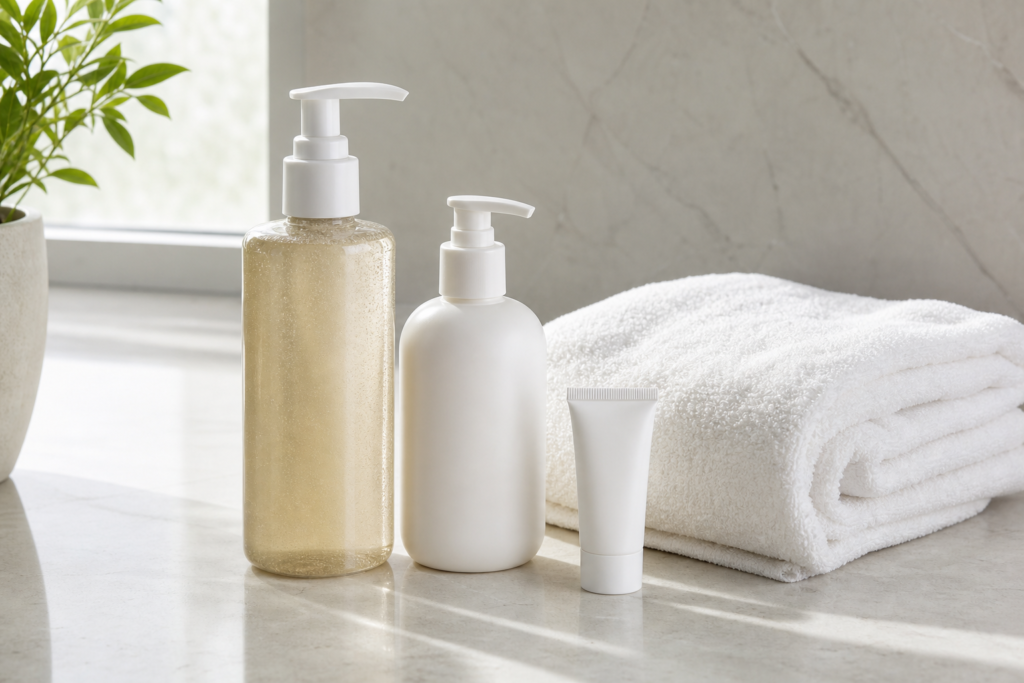
In the shower, use lukewarm water rather than very hot water, and keep showers reasonably short. Apply the wash with your hands or a soft cloth; vigorous scrubbing with a rough glove every day can create the very inflammation we are trying to avoid. Rinse well and pat the body dry instead of rubbing hard with a towel.
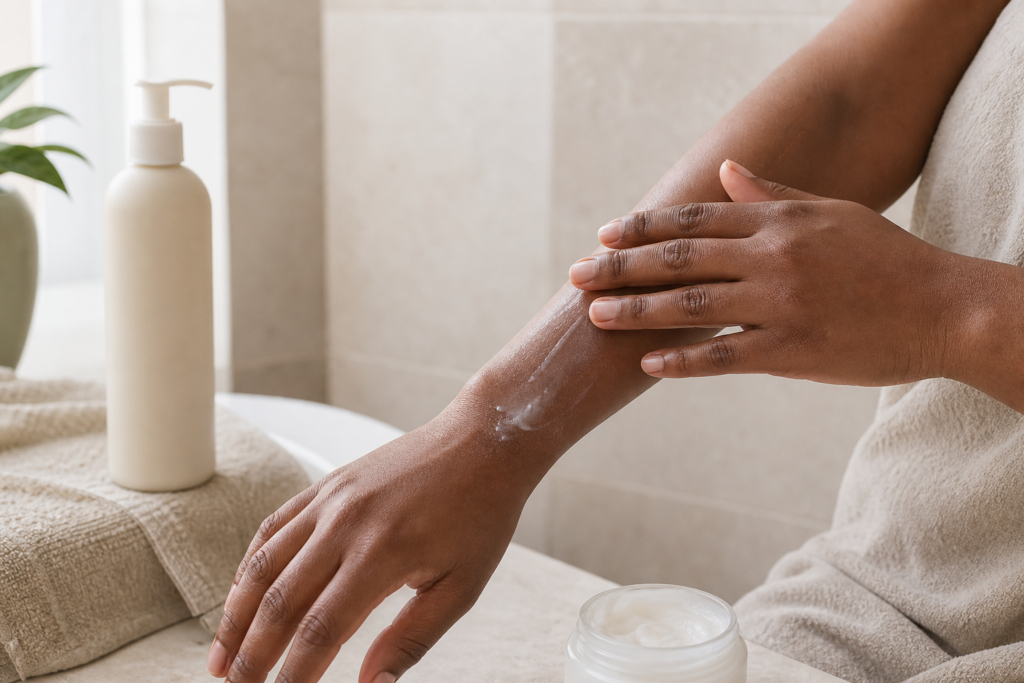
After showering, apply a plain moisturiser while the skin is still slightly damp. For marks on arms, chest, shoulders, or legs that see daylight, use broad-spectrum sunscreen when those areas are exposed. This is easy to overlook, but sun exposure can make uneven tone look more persistent. Our related guide on body lotion for glowing Black skin can help you choose a moisturising follow-up step.
For areas prone to body acne, shower after heavy sweating when practical, avoid picking at bumps, and wash workout clothing regularly. If ingrown hairs are a trigger, consider gentler hair-removal habits and avoid shaving too closely. You can also read our guide on acne marks on Black skin for a more focused look at the marks that can follow breakouts.
How often should you use an exfoliating wash?
There is no single schedule that suits everyone. I usually suggest starting an active wash two or three times per week, then assessing how the skin feels for at least a couple of weeks. If there is no dryness or stinging, you may be able to use it more often. If you have eczema, very dry skin, or a history of irritation, speak with a dermatologist before making exfoliation a frequent habit.
On the other days, use a mild cleanser. This alternating approach is often more sustainable than buying several strong products and using all of them together. A thoughtful body wash for hyperpigmentation on Black skin routine is consistent, not aggressive. I would rather see a gentle plan used comfortably for months than a harsh plan abandoned after one week.
What to avoid
Avoid products marketed as bleaching, quick-whitening, or instant lightening, especially when the ingredient list is unclear. Skip abrasive scrubs, lemon juice, undiluted essential oils, and DIY mixtures that can burn or irritate the skin. We should also avoid using several acids, retinoids, or benzoyl-peroxide products all over the body at once unless a clinician has given clear guidance.
If your dark marks are caused by repeated friction, address the friction too. Tight clothing, persistent scratching, and rough exfoliation can keep the cycle going. For a broader everyday approach, our skincare routine for melanin-rich skin explains how to keep routines simple and supportive. If you are choosing a leave-on product, our guide to brightening creams without bleaching is another useful internal read.
When to see a dermatologist
Book an appointment if marks are changing quickly, becoming raised, painful, very itchy, or appearing with no obvious trigger. A dermatologist can help distinguish post-inflammatory marks from other pigmentation concerns and may recommend stronger, safer treatments. This is not a failure of your routine; it is simply the right time to get individual guidance.
For most people, progress is gradual. Take a photo in consistent lighting every four to six weeks if you want to track change, rather than judging the skin every day. That makes it easier to see whether a routine is helping without chasing every new product that appears online.
The bottom line
The best body wash for hyperpigmentation on Black skin is usually the one that addresses your trigger without causing fresh irritation. Choose a gentle wash if dryness is your main concern, consider salicylic acid if body acne or ingrown hairs are involved, moisturise consistently, and protect exposed skin from the sun. Give the routine time, keep expectations realistic, and seek professional advice when marks are persistent or uncomfortable.
Quick checklist before you buy
Before adding a new wash to your basket, check whether your skin is currently dry, irritated, or actively breaking out. Choose one product with a clear purpose, patch test when possible, and keep the rest of the routine uncomplicated for the first few weeks. We do not need a shelf full of actives to make progress. A mild cleanser, a suitable treatment used carefully, moisturiser, and sun protection for exposed areas are usually a stronger foundation than constant product switching.